
 0
0



- Home
- Knowledge
- Equipment Selection
- UV Curing
UV Curing
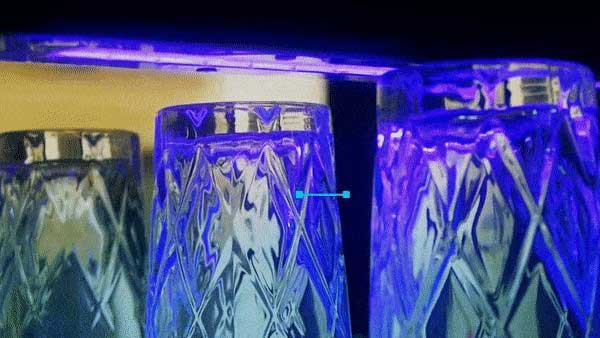
UV Curing Technology: The Core Link Driving Precision Printing and Green Chemistry
In modern screen and pad printing production lines, UV Curing (Ultraviolet Curing) has become the mainstream technology for achieving high productivity and net-zero carbon emissions. This process transforms liquid photocurable materials—such as inks, resins, or adhesives—into high-strength solids within mere seconds. It offers core advantages including resource efficiency, plant space savings, minimal waste, and ultra-high throughput. However, to flawlessly execute this split-second chemical transformation, the ultimate unsung hero behind the scenes is the "Photoinitiator."
Unlocking the Secret to Split-Second Hardening: Photoinitiators and Process Synergy
What is a photoinitiator? Simply put, it is a chemical compound highly sensitive to specific wavelengths of light. When it absorbs ultraviolet energy emitted by a UV curing machine, its molecular structure instantly dissociates to generate highly reactive free radicals or cations. These active particles immediately trigger a chain polymerization and cross-linking reaction among the monomers and oligomers in the ink, forcing the liquid structure to instantly lock into a dense, three-dimensional solid network film.
💡 Why Are UV Inks and UV Curing Machines Inseparable?
This represents a vital piece of system engineering! The photoinitiators contained within the UV Ink (chemical side) must perfectly match the specific optical wavelength (e.g., 395nm) and radiant energy delivered by the UV Curing Machine (equipment side). If the wavelength is incorrect or the energy output is insufficient, the photoinitiators cannot be fully activated. This leads to common production headaches like a tacky ink surface, incomplete internal curing, or poor ink adhesion.
Two Core Reaction Mechanisms of UV Curing
Depending on the chemical pathway triggered after the photoinitiator is excited, industrial light-curing technology is divided into two primary systems:
- Free Radical System: The traditional and most widely used system in the market. Its main drawback is its susceptibility to "Oxygen Inhibition" from the surrounding air, which often leaves the outermost layer incompletely cured, resulting in a slight sticky residue.
- Cationic System: An emerging technology increasingly adopted by high-precision manufacturing. The cationic system is completely unaffected by oxygen and continues its curing process (dark reaction) even after the UV light source is turned off. With significantly reduced shrinkage during curing, it dramatically enhances ink adhesion and bonding strength on a wide variety of hard-to-print substrates, perfectly overcoming the shortcomings of the free radical system.
Premium Ink Recommendations:
German RUCOINX Eco-Friendly UV Ink - 920UV Series ↗
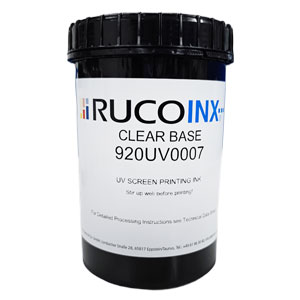
Outstanding Abrasion Resistance, Chemical Corrosion Resistance, and Excellent Weatherability
Exclusively distributed in Taiwan by FINE CAUSE, the German RUCO 920UV Series Industrial Ink utilizes an innovative, proprietary formulation. It features a highly efficient photoinitiator system designed to resonate perfectly with precise UV wavelengths and energy levels, driving rapid polymerization of monomers into high molecular polymers for instantaneous film formation. Once fully cured, it delivers not only exceptional adhesion to various irregular and difficult substrates but also outstanding resistance against wear and tear, chemical corrosion, and harsh weather conditions, making it the gold standard for high-end industrial screen printing.
-
Precise Curing Parameter Calibration: The curing efficiency of UV ink often depends on the specific color type and the thickness of the ink deposit. All colors within the RUCO UV920 series are recommended to be cured using a medium-pressure UV curing lamp with an output of at least 160 W/cm. Production testing shows that the most effective output energy range is 250 to 300 mJ/cm². Following UV exposure, letting the printed parts rest at room temperature for 12 hours allows full molecular cross-linking, elevating the ink to its maximum adhesion performance.
German RUCOINX Eco-Friendly UV Ink - 937UV-LED Series ↗
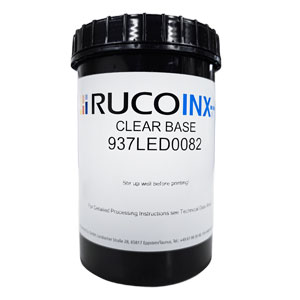
- Two-Component Versatile Compatibility: This premium two-component UV screen printing ink features a highly sensitive generation of photoinitiators. It is fully compatible with both traditional medium-pressure mercury lamps (Hg-doped) or iron lamps (Fe-doped) and modern, mainstream LED-UV curing light sources.
- Superb Medium and Chemical Resistance: The 937 UV LED screen printing ink series is highly optimized for multi-color blending and color matching. Its resistance to aggressive industrial chemicals, cosmetic ingredients, and various typical industrial fluids significantly outperforms conventional formulas.
- High-Efficiency Adhesion and Water Resistance: Compared to conventional UV ink series, the 937 series achieves optimal screen printing adhesion and scratch resistance with much shorter exposure times. After printing and resting at room temperature for approximately 72 hours, the ink layer develops top-tier resistance against water, detergents, ice-water immersion, and freezing conditions.
FINE CAUSE Selection: Industrial UV Curing Machines / LED Curing Systems
Premium UV ink must be paired with exceptionally stable curing equipment. To satisfy different factory floor footprints and process requirements, FINE CAUSE recommends several high-performance UV curing systems to help your line achieve the promise of "Instant drying upon exposure, zero color fading after curing":
1. LED Conveyor UV Curing Machine (Floor-Standing) - Model: C00000006 ↗
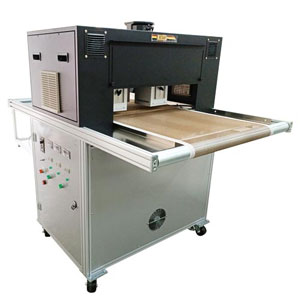
- Production Highlight: Specifically engineered for highly adaptable manufacturing setups. Its floor-standing design is extremely stable and easily accommodates products of varying heights and geometries.
- Flexible Control: Equipped with three adjustable LED lamp modules that can be rotated to concentrate intense light over a broad area, or configured to run individually to save energy and optimize specific curing profiles.
2. High-Efficiency LED Conveyor UV Curing Machine - Model: FC-8250-LED ↗
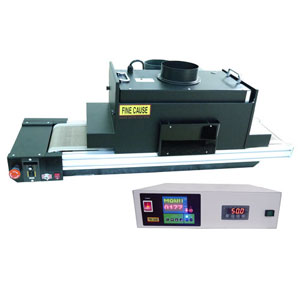
- Production Highlight: Utilizes a mainstream 395nm high-power LED light source, offering low-heat output and rapid curing to prevent thermal deformation of heat-sensitive materials.
- Smart Process Management: The height of the UV light source is fully adjustable, and the conveyor belt speed features a clear digital LED display with forward and reverse direction controls for streamlined workflow management.
- Specialized Consumables: Features a high-density, heat-resistant Teflon mesh belt that reduces transportation vibrations and resists the accumulation of residual UV adhesives, keeping maintenance completely hassle-free.
3. Smart Touchscreen UV LED Curing System - Model: FC-L200 ↗
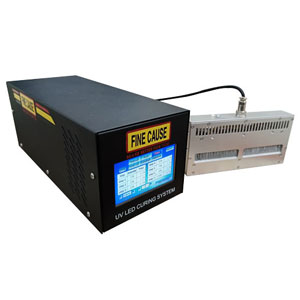
- Production Highlight: Built with an industrial-grade smart touchscreen HMI, allowing engineers to intuitively adjust and fine-tune UV intensity, exposure duration, and customized operating modes.
- Intelligent Monitoring: Real-time tracking via the HMI keeps tabs on total UV LED runtime and remaining lifespan, facilitating smooth preventative maintenance.
- Extended Durability: The heavy-duty wiring between the lamp heads and the main control unit uses flexible, bend-resistant cabling to maximize service life. Supports multi-group signal driving for independent control and parameter adjustments across individual lamp sections.
4. Portable Handheld UV Curing Device - Model: FC-XLITE400Q ↗
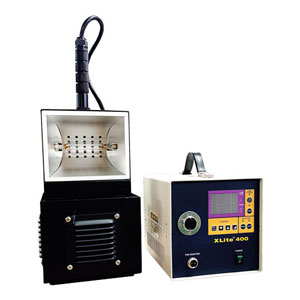
- Production Highlight: A mobile, agile light source layout that makes it incredibly convenient to cure oversized workpieces, irregular objects, or target localized spots on-demand.
- Custom Configuration: Can be outfitted with either long-wave (UVA) or short-wave (UVC) UV lamps depending on the chemical properties of your chosen inks or adhesives.
- Error-Proofing Mechanism: The control panel includes a digital timer function with an automatic buzzer alert upon completion, ensuring consistent and precise curing quality.
Conclusion: FINE CAUSE, Your One-Stop Expert in UV Printing and Curing Systems
Industrial surface printing and drying-curing processes form an interconnected system. Every single variable—from the surface energy of the substrate and the choice of UV Inks (such as the RUCO 920UV and 937UV-LED screen printing series) to the wavelength and energy matching of the downstream UV Curing Equipment—directly dictates the activation efficiency of the photoinitiators. This, in turn, decides your final product yield and adhesion quality.
Whether you are looking to upgrade your production lines to meet stricter green chemistry compliance or seeking the ultimate UV curing solution for a brand-new product line, FINE CAUSE is fully prepared to provide comprehensive technical consulting, equipment selection, and one-stop integration services. Our facilities feature complete, in-house laboratory sampling and testing setups. We invite you to contact us anytime to arrange actual sample testing, and let our FINE CAUSE expert engineering team tailor the perfect manufacturing setup for your business!

Article Classification
Recent Articles
- How to Choose Between a Plasma Treatment Machine and a Corona Treatment Machine?
- How to Choose the Right Automation Equipment to Build an Efficient Production Line
- Corona Treatment
- What is Flame Treatment? Polarizing PE/PP to Prevent Ink Adhesion Failure
- How to Choose an Industrial Mixer: Planetary vs. Centrifugal