
 0
0



- Home
- Knowledge
- Equipment Selection
- How to Choose Between a Plasma Treatment Machine and a Corona Treatment Machine?
How to Choose Between a Plasma Treatment Machine and a Corona Treatment Machine?
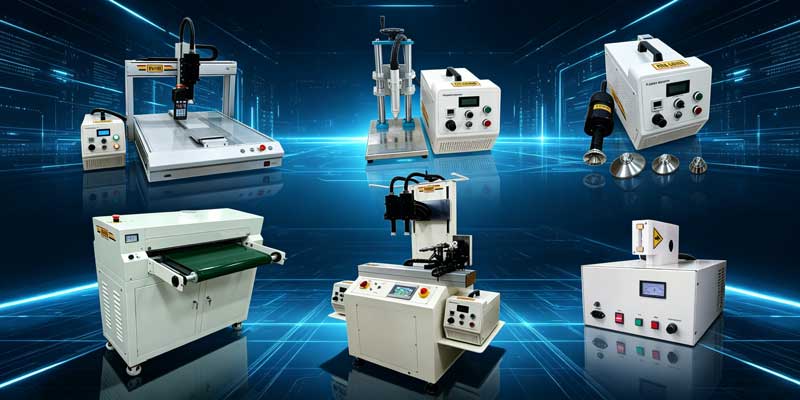
Surface Treatment Before Printing: A Safe and Fast New Choice
How to Choose Between a Plasma Treatment Machine and a Corona Treatment Machine?
When considering whether to choose a corona treatment machine or a plasma treatment machine for surface activation, understanding their distinct characteristics, advantages, and limitations is crucial for selecting the equipment that best meets your industrial production needs.
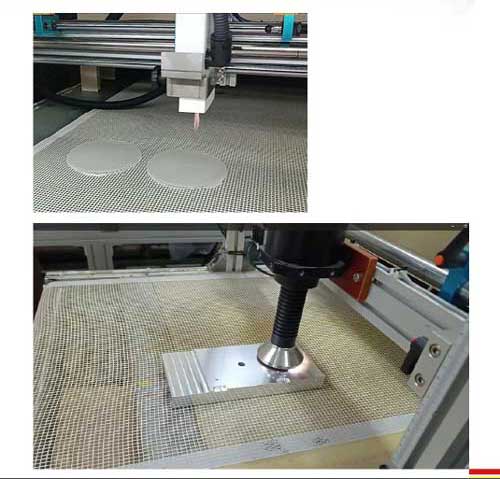
Advantages of Plasma Treatment Machines
- Wide Material Applicability: Perfect for diverse substrates, including plastics, metals, glass, ceramics, paper, and multi-component materials.
- Ideal for Curved and Irregular Surfaces: Excellent for 3D objects with complex geometries, such as bottles, containers, plastic tubes, and rubber tires.
- Deep & Efficient Surface Treatment: Capable of micro-level cleaning and advanced activation, providing superior ink adhesion results for high-precision, high-cleanliness applications.
- Low-Temperature Treatment: Highly suitable for heat-sensitive substrates without causing thermal deformation or damaging the base material.
- Multi-functional Versatility: Delivers multiple surface modification functions including cleaning, activation, and coating to meet various industrial criteria.
- High Operation Safety: Safely treats conductive metal materials without causing short circuits, electrical arcs, or combustion risks.
- Superior Treatment Efficiency (Dyne Level): Plasma treaters can achieve dyne levels over 10 points higher than standard corona treaters, making it essential for UV or water-based ink printing on challenging substrates like PP and BOPP.
- Understanding Dyne Level: It indicates the surface energy of a material. The higher the dyne level, the better the ink wettability and adhesion. Since water-based inks have lower inherent wetting capabilities, achieving a high dyne level on the material surface is critical.
Advantages of Corona Treatment Machines
- Optimized for Continuous Webs & Sheets: Ideal for treating plastic films, sheets, aluminum foil, and metallized films such as PP, PE, PET, OPP, PS, ABS, paper, and fibers.
- Curved Surface Capabilities: Customized models are exceptionally proficient at treating curved and structured parts like consumer bottles, industrial containers, and tubes.
- Cost-Effective Choice: Corona treatment systems feature a significantly lower initial capital investment and lower long-term operating costs.
- User-Friendly & Simple Operation: Highly intuitive to operate and simple to maintain, eliminating the requirement for specialized technicians on the line.
- Reliable Process Safety: Utilizes low-temperature, high-energy discharges, which remain stable and non-combustible under standard operations.
- Rapid Surface Activation: Instantly enhances the substrate's free surface energy, allowing standard printing inks and industrial coatings to adhere flawlessly.
- Standalone Setup (No Air Supply Needed): Does not require an external air compressor or specialized gas supply, saving plant utility costs.
FINE CAUSE Professional Selection Recommendations
- Plasma Treatment Machine: If your manufacturing involves an array of materials including metals and glass, and demands ultra-precise, high-cleanliness surface activation, the F1Z-1000 Plasma Surface Treatment Machine (Rotating Gun) is your premier choice.
- Curved Surface Corona Treatment Machine: If you need to process 3D parts, hollow objects, or curved products such as commercial bottles and packaging containers while strictly balancing budget constraints, the FC-FGX-D Curved Surface Corona Treatment Machine will perfectly suit your workflow.
- Sheet Corona Treatment Machine: If your primary application focuses on flat plastic films, sheet components, or flat packaging stocks, the FC-P40 Sheet Corona Treatment Machine is the most efficient match.
No matter which technology you choose, FINE CAUSE provides industry-leading surface treaters and engineering support to ensure your printing process is fast, efficient, and highly stable. Click on the product links above to view full technical specifications, or contact us today to schedule a laboratory trial with your specific materials.
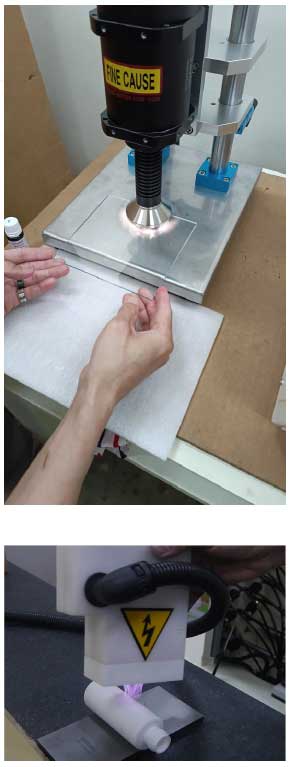
▲ Above: F1Z-1000 Plasma Surface Treatment Machine (Rotating Gun)
Below: FC-FGX-D Curved Surface Corona Treatment Machine
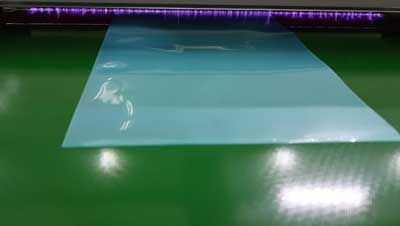
▲ Above: FC-P40 Sheet Corona Treater
---
Plasma vs. Corona Treater Complete Analysis & Selection Chart
| Which is Better: Plasma Treatment Machine or Corona Treatment Machine? | ||
|---|---|---|
| Key Differences | General Plasma Surface Treatment Machine | General Corona Treatment Machine / Curved Surface Corona Machine |
| Principle | Uses a high-frequency, high-voltage electric field to generate plasma in gas, where high-energy particles bombard the material surface. | Uses a high-voltage electric field to create a corona discharge on the material surface, where high-energy electrons strike the material surface. |
| Air Source Connection | Requires an air compressor / external air connection | No external air connection required |
| Material Suitability | Universally applicable to various materials (plastics, metals, glass, ceramics, paper, etc.) | Most effective and widely used for plastics and film materials |
| Surface Treatment Depth | Provides deep treatment with highly optimal and long-lasting results. | Focused on surface-level layer treatment with rapid processing speeds. |
| Heat Impact | Low-temperature treatment, ideally suited for heat-sensitive materials without damaging the substrate. | Generates higher heat during the discharge process; some extremely heat-sensitive materials may not be suitable. |
| Multifunctionality | Provides multiple surface modification functions such as advanced cleaning, activation, and nano-coating. | Mainly engineered for high-speed activation and surface energy (dyne level) enhancement. |
| Precision Control | Precisely controls discharge power and scanning area, ideal for high-precision tolerance requirements. | Streamlined and simple power control, suited for general requirements with less precise tolerances. |
| Treating Three-dimensional Objects | Excellent for 3D objects, complex profiles, curved contours, bottles, and commercial containers; offering a wider application range. | Sheet Corona Treater: Mainly optimized for flat components and thin film materials. Curved Corona Treater: Fully capable of treating 3D objects, round shapes, and container profiles with a wide application range. |
| Equipment Cost | The initial capital cost is relatively higher compared to corona systems. | The equipment purchase and operational costs are relatively lower. |
| Operation Complexity | FINE CAUSE plasma treatment machines are engineered for simple operation and easy integration. | FINE CAUSE curved surface / sheet corona treatment machines feature straightforward, plug-and-play simplicity. |
| Suitable Industries | Automotive parts, electronics manufacturing, medical devices, high-performance optical coatings, and high-standard container industries. | Packaging lines, consumer bottle printing, extrusion film lines, and packaging sheet material surface treatments. |
| Printing Assistance | Greatly increases surface energy across various substrates, drastically enhancing ink adhesion, uniform trapping, ink absorption, and final print fidelity. | Effectively raises material surface energy, allowing standard printing inks to anchor more firmly to the surface. |
| Cleaning Effect | Outstanding microscopic cleaning effect; removes dust and organic oils, and eliminates static electricity. Effectively boosts bonding strength between different materials to increase overall durability and reduce adhesive usage. | Provides fundamental surface cleaning, neutralizes static charges, and maximizes surface wetting. |
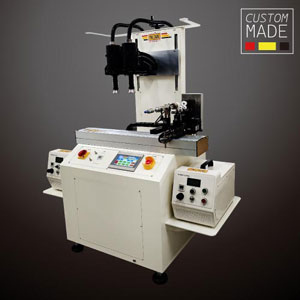
▲ FAFP02-SLG Rotary Plasma Surface Treatment Machine
Flat and Curved Shapes Shared - Servo System
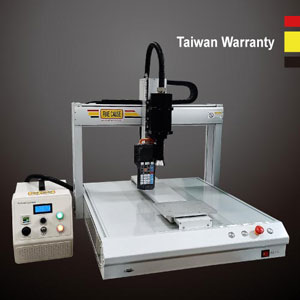
▲ FMPT-XYZ XYZ 3-Axis Gantry Motion Platform of Rotating Gun Plasma Treatment Machine

Article Classification
Recent Articles
- How to Choose Between a Plasma Treatment Machine and a Corona Treatment Machine?
- How to Choose the Right Automation Equipment to Build an Efficient Production Line
- Corona Treatment
- What is Flame Treatment? Polarizing PE/PP to Prevent Ink Adhesion Failure
- How to Choose an Industrial Mixer: Planetary vs. Centrifugal