
 0
0



- Home
- Knowledge
- Equipment Selection
- Corona Treatment
Corona Treatment
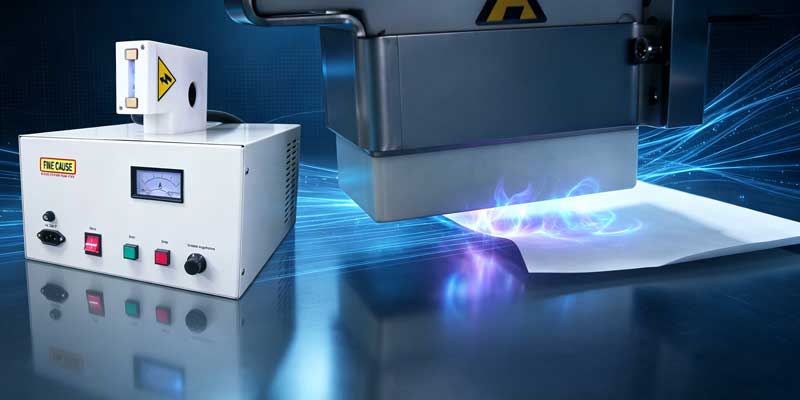
What is Corona Treatment? Essential Surface Modification Technology for Printing and Converting Industries
In industrial printing, packaging converting, and plastic film coating processes, operators frequently encounter frustrating challenges such as insufficient ink adhesion and pattern peeling. How can this be thoroughly solved? The answer lies in "Corona Treatment Technology," widely adopted across the printing industry. This article will provide an in-depth analysis of the physical principles of corona treatment, the dyne level requirements for water-based and UV inks, and how to select the right corona equipment for your production line.
As the demand for high quality and stable adhesion in industrial printing continues to grow, the adoption of Corona Treatment technology among printers and converters is showing a steady upward trend. Whether you are new to this concept or looking to optimize your existing process, this article will help you gain a comprehensive understanding of this critical surface treatment technology.
I. What is Corona Treatment? Principles Explained
Simply put, “corona treatment” is an electrical discharge treatment that imparts significantly higher adhesion properties to the substrate surface. Corona is generated using high voltage and high frequency across grounded and dielectric air nozzles without direct current passing between them, until the voltage reaches up to 3,000 to 5,000 V/cm². Subsequently, discharge molecules are emitted from the air nozzle, carrying high-energy free electrons accelerated toward the positive electrode. Corona treatment is the exact result produced by these dense, high-energy emitted ions.
What happens next? These ions penetrate and strike the substrate surface via electrical bombardment, disrupting its molecular structure. This oxidizes and polarizes the treated surface molecules, eroding the surface through ion strikes to effectively enhance the surface adhesion capability of the substrate.
II. The Role of Corona Treatment: Dyne Value and Ink Adhesion
The physical unit used to measure surface energy is called "Dyne." In industrial printing practice, there is a crucial golden rule: the surface energy of the substrate must be at least 10 Dynes higher than that of the ink for the ink to adhere perfectly without peeling off.
| Ink & Material Type | Surface Energy (Dyne Value) | Required Substrate Dyne Value |
|---|---|---|
| Standard PE Film (Untreated State) | Approx. 31 Dyne (Insufficient Adhesion) | Requires Corona Treatment to reach 38 ~ 46 Dyne |
| Solvent-Based Ink | Approx. 28 Dyne | Substrate requires 38 Dyne or higher |
| UV / EB Curing Ink | Approx. 32 ~ 34 Dyne | Substrate requires 42 ~ 44 Dyne or higher |
| Water-Based Ink | Approx. 36 Dyne | Substrate requires 46 Dyne or higher |
As shown in the table above, although water-based and UV inks offer environmental and fast-drying advantages, they possess higher surface tension. Printing directly onto untreated (or dyne-decayed) plastic films often leads to ink repellency, stringing, and poor halftone dot transfer. This is precisely why modern high-precision printing must be equipped with on-line corona treaters.
III. Popularity of Water-Based Inks and Demand for On-Line Corona Treatment
Back in the 1970s, corona treaters were mostly found only in film blowing factories. Packaging printers back then mainly used solvent-based inks, making surface treatment relatively simple—slightly increasing energy during film blowing was sufficient to accommodate lower-surface-energy solvent inks. However, in the 1980s, rising environmental awareness led to strict new environmental conventions, impacting the packaging printing industry. Environmental advocates grew concerned over large amounts of solvent evaporating into the atmosphere. Responding to this urgency, water-based inks were rapidly developed and produced.
This major shift targeted high-solvent-evaporating operations—specifically "wide-web printers" in packaging printing. Consequently, the wide-web flexo printing industry took the lead in adopting water-based inks on plastic films. This momentum drove advances in inks, anilox rollers, ink metering methods, impression cylinders, and rapid drying systems to optimize the printing environment for water-based inks. These enhancements also reshaped corona treatment development, adapting to changing ink characteristics and substrate materials.
Even though plastic films undergo corona treatment during extrusion, their high surface energy degrades over time, transport, and storage. It frequently fails to meet the stringent demands of water-based inks, especially during high-speed printing and fine-dot transfer. This explains why printers require dedicated corona treaters in-house.
Narrow-web printers have also shifted toward water-based inks due to regulations and focus on occupational safety and worker health. Paper labels and trademarks do not require corona treatment because water-based inks adhere to paper without issues. However, the adoption of plastic films continues to show marked growth in sectors like aviation tags and in-mold labeling packaging. Narrow-web printers and converters must address this transition to water-based inks on plastic substrates. They have two options: purchase expensive pre-treated film laminates, or install on-line corona treaters—with most choosing on-line corona treatment. Furthermore, growing demands for UV and EB curing (where inks possess high surface energy and require instant drying) often cause viscosity, flow, and shrinkage issues during transfer, making on-line corona treatment indispensable across packaging printing fields.
IV. Who Needs Corona Treatment?
Facing current environmental pressures to replace solvent inks with water-based or UV alternatives, the need for corona treatment has become increasingly evident. Every application—including printed plastic coatings, film lamination, plastic sheets, metallic foils, aluminum foils, and more—requires corona treatment. Many film manufacturers perform surface treatment for downstream converters, as well as surface treatment for laminating paper, aluminum foil, and film (disrupting paper surface fibers so plastic films can be laminated lighter and thinner to reduce costs). The market for corona treatment continues to surge like a spring, with industry experts considering its potential virtually limitless.
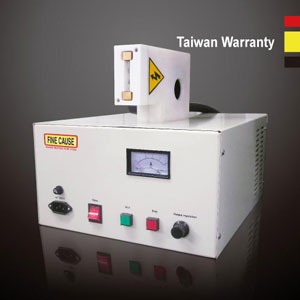
V. Equipment Improvements & R&D: FINE CAUSE FC-FGX-D Corona Treater
Improvements in corona treaters focus on compact sizing, efficiency, energy output, and high processing speeds required for on-line operations, while tailoring to diverse substrate materials. Corona treatment technology has matured significantly. In recent years, exaggerated claims regarding treater versatility and multi-functionality are mostly industry noise.
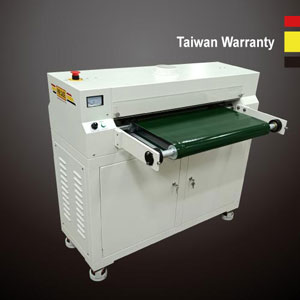
Numerous factors influence corona treater design. While manufacturers desire a single standardized model for all applications, customers prefer custom solutions tailored specifically to their needs. Innovations focus primarily on technical assembly and customer-driven modifications. One well-known method uses impact treatment, striking already-treated materials to boost dyne levels from 38 to 42–46 Dyne. Corona treaters vary in type—including traditional, bare-roll, and 3D types—to meet diverse printing requirements.
To meet strict modern industrial requirements for precision and diverse materials, FINE CAUSE specially presents the FC-FGX-D Corona Treater Machine. Through its intuitive control panel, operators can adjust corona intensity in real time to alter surface tension and dramatically boost ink adhesion.
We also offer the specialized FC-P40 Sheet Corona Treater, perfectly suited for plastic sheets, aluminum foil, glass thin films, synthetic paper, non-woven fabrics, non-conductive sheet materials, and more.
- FC-FGX-D Treater Specifications: Available in two maximum treatment width options: approx. 50mm and approx. 100mm.
- Broad Applications: To improve ink adhesion, rely on corona treaters! Fast, safe, and compatible with multiple materials to boost printing quality and efficiency.
- Risk-Free Experience: Take advantage of our 14-day free trial or flexible leasing options to effortlessly verify quality improvements.
👉 Want to elevate your product printing quality? Contact FINE CAUSE today to request a 14-Day Free Trial for the FC-FGX-D Corona Treater!


Article Classification
Recent Articles
- How to Choose Between a Plasma Treatment Machine and a Corona Treatment Machine?
- How to Choose the Right Automation Equipment to Build an Efficient Production Line
- Corona Treatment
- What is Flame Treatment? Polarizing PE/PP to Prevent Ink Adhesion Failure
- How to Choose an Industrial Mixer: Planetary vs. Centrifugal