
 0
0



- Home
- Knowledge
- Consumables Application
- Solvents and Their Relationship with Printing
Solvents and Their Relationship with Printing
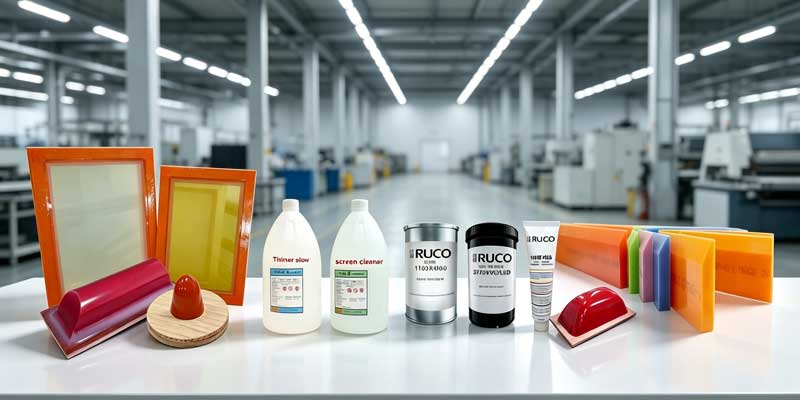
Solvents and Their Relationship with Printing: A Guide to Plate Depth and Drying Speed Alignment
In industrial printing processes, choosing the correct industrial solvent and printing auxiliary is a key technology determining pad and screen printing quality. FINE CAUSE has compiled this quick cross-reference guide to solvent selection based on different printing machinery, plate depths, and drying speed requirements, helping technicians precisely control process settings and effectively eliminate various printing pain points.
⚠️ Important Technical Operation Tip:
The following content serves as a specification reference accumulated from FINE CAUSE's years of process experience. During actual mixing and operations, adjustments should still be made flexibly based on different ink brands, environmental temperature, and climate humidity. For example, RUCOINX brand inks are generally the fastest-drying ink series on the market (highly suitable for high-speed pad printing processes). In practical application, to maintain stable ink transfer, it may be necessary to add a slightly slower-drying solvent to achieve the best balance.
I. Specifications of Cleaning and Diluting Solvents for Screen/Pad Printing
Based on your printing method (sealed ink cup, open inkwell, screen printing) and plate/screen micron depth (µm), please refer to the technical specifications below for ink dilution and mixing:
| Product Specifications | Application Scope, Process Conditions, and Technical Specifications |
|---|---|
| Super Fast-Drying Solvent | Most suitable for sealed ink cup pad printing machines. It is mixed and used when the pad printing plate (or silicone plate) depth is approximately between 23µ ~ 32µ, significantly accelerating the evaporation speed of high-depth inks and facilitating perfect ink release from the pad. |
| Fast-Drying Solvent | Features broad adaptability in pad printing:
|
| Medium-Drying Solvent | Suitable for inkwell pad printing. When the pad printing plate depth is within the thinner range of 15µ ~ 22µ, using a medium-drying solvent is recommended to maintain ink fluidity and transfer rate on the open plate. |
| Slow-Drying Solvent | Suitable for general screen printing (silk screen printing). Furthermore, it is highly applicable for high-precision halftone pad printing with a plate depth of only about 15µ, effectively preventing fine dots from drying up prematurely before pad transfer. |
| Super Slow-Drying (Anti-Clogging Agent) | Mainly suitable for screen printing processes. When high ambient factory temperatures cause the ink to dry too quickly, or when printing patterns feature extremely fine lines and small text, adding this agent effectively resolves severe screen clogging issues. |
II. Technical Relationship Between Plate Depth (µm) and Solvent Evaporation Speed
In the industrial pad printing craft, the etched micron (µm) depth of the plate directly determines the thickness of the ink film. Deeper plates (such as 28µ ~ 32µ) store a larger volume of ink within the grooves. If evaporation is not fast enough, it can cause incomplete ink pickup by the pad or blurred pattern edges; thus, it must be paired with super fast-drying or fast-drying solvents. Conversely, when the plate depth is shallow (such as 15µ halftones), the minute amount of ink evaporates instantly in the air. In this case, technicians must rely on medium or slow-drying solvents to extend the open time of the ink, ensuring high-precision transfer quality.
III. How to Fine-Tune Ink Viscosity Based on Weather and Environment
Beyond the hardware conditions of machine types and plate depths, environmental fluctuations inside the factory are critical variables that cannot be ignored. During hot and dry summers, solvent evaporation speed can accelerate exponentially; therefore, the proportion of slow-drying solvents should be increased appropriately. In humid, cold winter conditions, precautions must be taken against delayed ink drying, which leads to cobwebbing or poor ink trapping issues. FINE CAUSE recommends that technicians perform minor ink trial mixing and viscosity fine-tuning according to the daily temperature and humidity before starting formal mass production each day, ensuring long-term production stability and ultimate print texture.

