
 0
0



- Home
- Knowledge
- Consumables Application
- How to Choose Pad Printing Pads?
How to Choose Pad Printing Pads?
How to Choose Pad Printing Pads? A Professional Pad Printing Pad Specification and Selection Guide
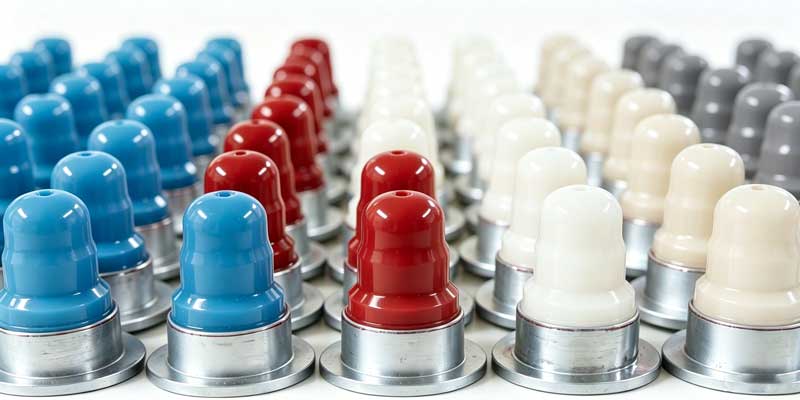
In the industrial pad printing process, the material color, shape, size, and hardness of the printing pad directly determine the transfer completeness of the pattern and the air-venting effect. FINE CAUSE has compiled this "Pad Printing Pad Selection and Silicone Specification Reference Chart" to help technical personnel quickly evaluate ink pickup, ink release, and solvent resistance process parameters.
🔥 Featured Technical Resource Recommendation: Pad Hardness Card (Click Here for Free Request)
I. Specification Reference Chart for Various Pad Printing Pad Silicone Colors and Performance
| Indicator Guide: ★ Excellent | ● Good | △ Fair | X None | |||||
|---|---|---|---|---|---|
| Silicone Color | Ink Pickup | Solvent Resistance | Ink Release | Anti-Static | Extensibility |
| Blue | △ | ★ | △ | X | △ |
| Red | ★ | ● | ★ | X | △ |
| Warm White | ★ | △ | ● | X | ★ |
| Pink | ★ | △ | △ | ★ | ● |
| Grey | ★ | △ | ★ | X | ● |
II. Core Technical Features of Various Silicone Colors
- Blue Silicone: Excellent solvent resistance and superior toughness to significantly extend pad lifespan, making it highly suitable for high-volume automated printing processes.
- Red Silicone: Exceptional ink pickup and release performance, ideal for printing patterns prone to poor air-venting and substrates with textured/matte surfaces.
- Warm White Silicone: Outstanding physical extensibility, highly recommended for soft printing pads to prevent tearing when covering irregular geometric substrates.
- Pink Silicone: Features excellent anti-static properties and superb ink pickup, allowing perfect rendering of high-precision fine fonts and lines.
- Grey Silicone: Combines the advantages of both ink pickup and ink release, delivering excellent color saturation with zero burrs or feathered edges when printing fine fonts.
⚠️ Important Note on Pad Hardness Formulation:
The percentages (%) indicated on the FINE CAUSE pad hardness card serve as a process reference based on the proportion of silicone oil added. The actual hardness will vary depending on the overall volume, size, and mass of the printing pad.
- Example A: Large-volume pad with 40% silicone oil ➔ The actual finished product hardness is harder.
- Example B: Small-volume pad with 40% silicone oil ➔ The actual finished product hardness is softer.
III. Five Key Selection and Maintenance Indicators for Pad Printing Pads
1. Pad Shape and Size Selection
- The pad model is usually chosen based on the actual dimensions and graphic content of the printing pattern.
- If the pattern contains numerous fine lines, it is recommended to select a sharper geometric shape with higher hardness.
- For larger solid printing areas, a flatter, softer, and larger pad should be chosen.
- When combining multiple printing elements, try to use a combination of multiple pads to ensure optimal air-venting during the process.
- When a pad is compressed to a certain extent, its downward stroke angle becomes unfavorable for air-venting. Therefore, avoid choosing a pad that is too small for the print size unless restricted by surrounding component interference on the substrate.
- When using hard printing pads, the machine's downward stroke speed must exceed the ink's fluidity speed; otherwise, ink overflowing is likely to occur.
- If the ink mixture contains too many air bubbles, a harder pad can also be utilized to force out and squeeze away the excess air.
- When the printing surface has a curvature, a downward stroke speed that is too rapid can easily cause distortion or stretching of the printed pattern.
2. Technical Essentials of Pad Hardness
- Some silicone raw materials are inherently softer and ideal for soft pads, while others are only suited for high-hardness pads. Forcing a high-hardness raw material into a soft pad will drastically reduce its operational lifespan.
- Generally, pad printing pads with sharper geometric profiles and higher hardness offer better air-venting (proper air-venting prevents pinholes and avoids unprinted white spots). Consequently, fine lines and precise text must be paired with sharp, hard pads.
- Although hard pads offer superior air-venting, they are relatively more prone to ink overflowing; conversely, when printing large areas, soft pads help prevent uneven color density.
- The harder the pad, the greater the physical force exerted on the ink surface during ink pickup or transfer.
3. Optimization of Pad Ink Pickup
- Pad printing pads with superior chemical solvent resistance usually exhibit slightly weaker ink pickup performance during their initial use phase.
- Brand-new pad printing pads generally perform slightly worse in ink pickup compared to pads that have been broken in over a period of time.
- If you perform a trial print and confirm that the ink viscosity and solvent evaporation speed are correct but ink pickup remains incomplete, the surface of the new pad can be gently wiped with a dry cloth (or a cloth lightly moistened with alcohol or screen cleaner).
- Although wiping the pad surface enhances its ink pickup effect, it conversely reduces its ink release performance, requiring a careful balance during operations.
- Prior to ink pickup, avoid letting the pad pause for too long or stopping the machine in its home position, which leaves the ink pattern on the plate exposed to the air for extended periods, as this can easily cause the ink to dry out and result in incomplete pickup.
4. Adjustment of Pad Ink Release
- As the number of pad impressions increases over time, continuous chemical erosion from ink solvents and physical friction against substrates (which roughens the pad surface) will gradually degrade its ink release performance.
- The faster the evaporation speed of the industrial solvent paired with the ink, the better the ink release effect during transfer (however, excessively rapid evaporation causes incomplete ink pickup, requiring fine-tuning based on actual production processes).
- Before the pad compresses onto the substrate, the machine can be programmed to pause for approximately 0.3 to 1.5 seconds, allowing the ink to volatilize and dry slightly before pressing down, which significantly aids complete ink release. This effect is further enhanced when assisted by external drying equipment like a hair dryer (especially useful in cold winter environments).
- When the pad compresses while the ink is in a golden "semi-dry, semi-wet" state, the ink release effect is exceptional, supporting mass production of over 10,000 continuous impressions per day with complete ink release every single time.
5. Pad Lifespan and Maintenance
- Under ideal conditions where the substrate surface lacks sharp or jagged edges that could puncture or pinch the silicone, FINE CAUSE pad printing pads generally offer a production lifespan of 10,000 to 50,000 impressions.
- Three core physical factors affecting pad lifespan: compression deformation during production (the lower the machine presses, the shorter the pad lifespan), chemical corrosion from ink solvents, and natural silicone oxidation over time.
四、Industrial Printing Practical Application Examples
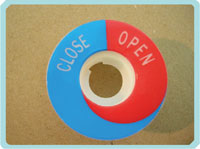 |
【Large Area Irregular Substrate Transfer Case Study】 This product structure is ideal for selecting a flatter and softer printing pad.
|
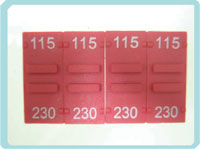 |
【High-Precision Fine Line Automated Mass Production Case Study】 This product surface and detailed graphics are ideal for selecting a sharper geometric and harder pad printing pad.
|

