
 0
0



- Home
- Knowledge
- Printing Selection Guide
- Contract Printing Guide: Choosing the Right Printing Methods
Contract Printing Guide: Choosing the Right Printing Methods
Contract Printing Guide: Choosing the Right Printing Methods
Contract Pad Printing Services, Contract Screen Printing (including Curved Surface Printing), Contract UV Digital Printing, Contract Laser Engraving, Contract Hot Stamping Services
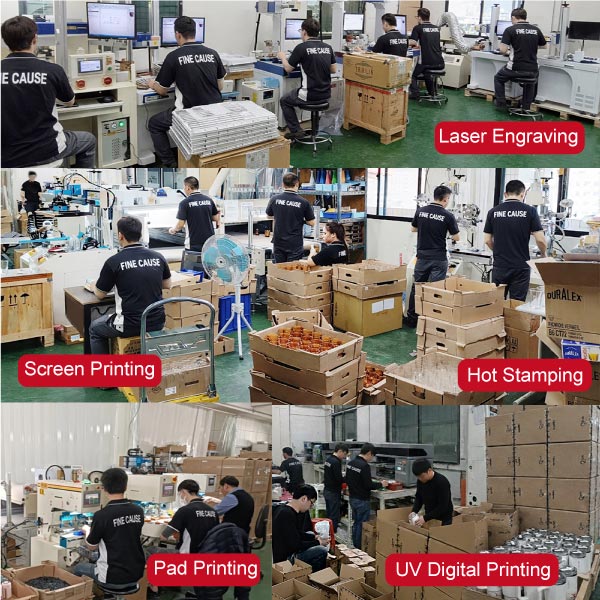
When selecting a contract printing service, you should simultaneously consider factors such as print volume, lead time, budget costs, and quality requirements, and then choose the most appropriate processing technology based on your actual needs. Below are the selection guidelines for the five most common industrial contract printing methods:
1. Based on Print Volume
-
Small Volume or Single-Piece Printing:
Best suited for UV Digital Color Printing. It requires no plate-making, offers fast delivery, and provides the highest flexibility for on-demand contract printing. -
Medium to Large Volume Printing:
Pad Printing is ideal for fine graphics or designs within four colors, offering lower unit costs at higher quantities and excellent color stability.
Screen Printing (including Curved Printing) is suitable for large-area LOGOs, bottle/container packaging, and advertising display panels.
2. Based on Quality and Customization Needs
-
Demanding Fine Details and High Color Accuracy:
You can choose either Pad Printing or UV Digital Color Printing; the latter is particularly excellent for photo-quality graphics and gradient effects. -
Requiring Metallic Lusture or Premium Quality Texture:
Hot Stamping creates high-end luxury effects, commonly seen on cosmetics packaging and luxury gift boxes. -
Demanding Long-Term Durability Against Fading:
Laser Engraving requires no ink, providing the absolute best permanence and durability.
3. Based on Lead Time and Cost
-
Requiring Quick Turnaround and Urgent Delivery:
Choose UV Digital Color Printing, which features instant curing/drying with no minimum order quantity (MOQ). -
Minimizing Mass Production Costs:
Opt for Pad Printing or Screen Printing, as they become significantly more cost-effective for medium to large production runs.
4. Other Specialized Requirements
-
3D/Curved Surface Printing: Can be effectively achieved through both Pad Printing and Curved Surface Screen Printing.
-
Special Finishes: Hot Stamping creates a premium metallic gloss, while Laser Engraving is perfect for permanent marking.
Comparison Table of 5 Contract Printing Methods
| Printing Method | Plate/Die Making Required? | Suitable Volume | Color Performance | Durability (Adhesion) | Cost Characteristics |
|---|---|---|---|---|---|
| Pad Printing | Required | Medium to Large | Single to Multi-color (Full color or gradients are more economical in large volumes) | Good | Low unit price for large volumes |
| Screen Printing | Required | Medium to Large | High color saturation (Full color or gradients are more economical in large volumes) | Good | Low unit price for large volumes |
| UV Digital Printing | Not Required | Small to Medium | High quality, supports gradients | Depends on substrate (Good after pre-treatment) | Cost-effective for small volumes; more expensive for large volumes |
| Laser Engraving | Not Required | Small to Medium | No color (Gradients can be achieved using dot-matrix density) | Excellent, never fades | Depends on graphic size and complexity |
| Hot Stamping | Required (Stamping Die) | Medium to Large | Single-color metallic luster | Good | Low unit price for large volumes |
Industrial Contract Printing FAQ
1. What is Pad Printing? What are its advantages?
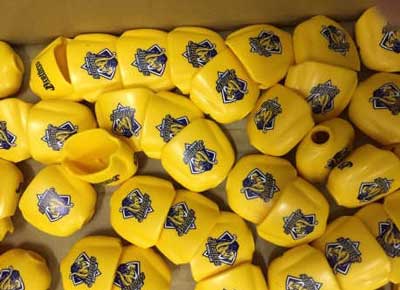
Pad printing can print on flat, concave/convex, irregular curved surfaces, and perform 360° roll printing, delivering fine graphics and stable colors. Due to its outstanding capability in reproducing fine details, it is widely used for LOGO printing on toys, keypads, electronic components, cultural/creative products, and promotional gifts. It offers a very low average unit price for large quantities, making it perfect for contract mass production.
2. What is the difference between Screen Printing and Pad Printing?
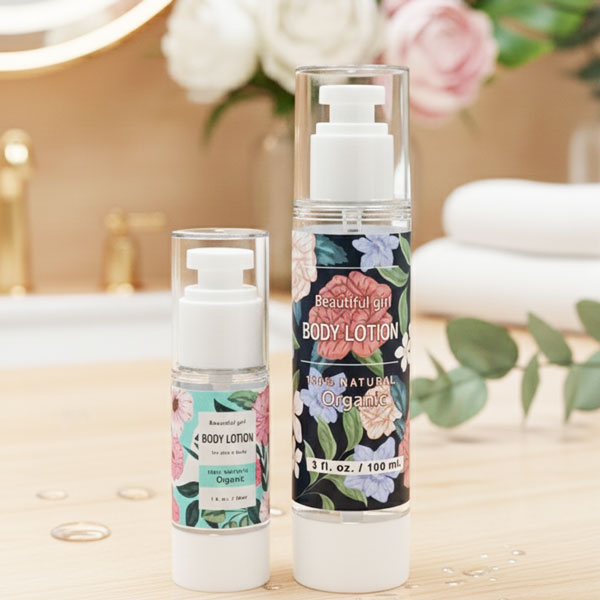
Screen Printing: Ideal for large-area patterns, bottles, and curved objects. It features a thick ink layer, vibrant colors, and strong wear resistance.
Pad Printing: Excels at printing high-precision fine lines on complex-shaped products. For medium to large volumes, contract screen printing is more cost-effective for larger areas, whereas pad printing remains superior for small, intricate details.
3. In what scenarios is Digital Printing (UV Color Printing) most suitable?
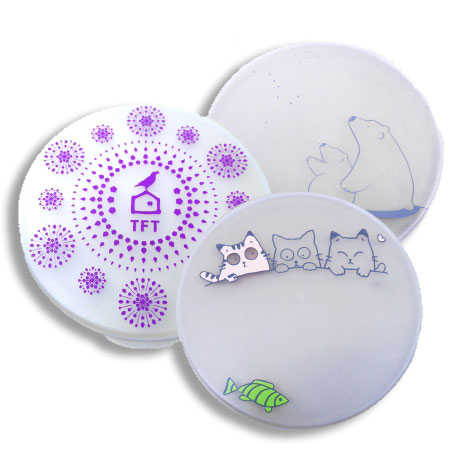
It is perfect for low-volume high-mix contract printing, customization, gradients, and photo-quality printing. It requires no plate-making, allows printing from a single piece (MOQ=1), and offers fast turnaround. It is commonly used for brand stickers, color labels, and small-batch merchandise.
4. What are the features and limitations of Laser Engraving?
Laser Engraving carves directly onto the surfaces of metal, wood, leather, glass, silicone, etc., ensuring high precision and permanent durability that never fades.
Limitations: It cannot display multi-color graphics, and the contract manufacturing cost can be higher for complex, large-area patterns.
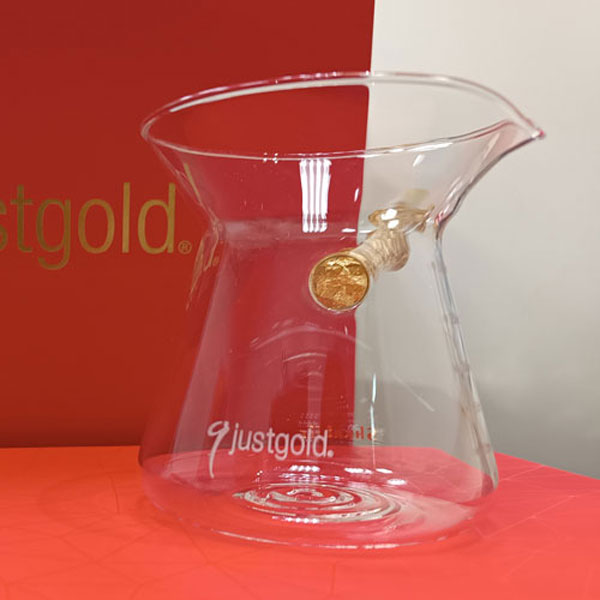
5. How does Hot Stamping enhance product texture and value?
Hot stamping transfers metallic foils onto surfaces via high-temperature pressing, creating high-end, glossy LOGOs. It is widely used in cosmetics packaging and luxury gift boxes.
Advantages: Excellent wear and scratch resistance.
Disadvantages: Requires customized stamping dies and cannot produce gradient or multicolored graphics.
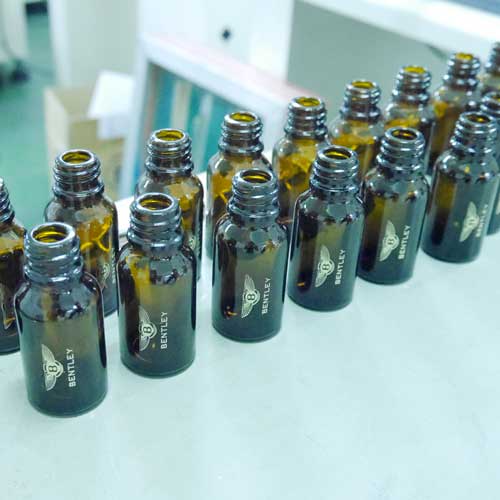
6. Which printing method should be chosen for small batch orders?
Choose UV Digital Color Printing. It provides exceptional flexibility, single-piece printing capabilities, and rapid delivery, making it ideal for small-volume, high-variability, and customized contract printing demands.
7. If maximum durability and fade resistance are required, how should I choose?
Choose Laser Engraving. Since the markings do not use ink, they will never peel or wear off. It is perfect for serial number engraving, permanent marks, industrial parts, and premium gifts.
8. What contract printing services does Fine Cause provide? What are our features?
Fine Cause professionally provides industrial contract printing services for Contract Pad Printing Services, Contract Screen Printing (including Curved Surface Printing), Contract UV Digital Printing, Contract Laser Engraving, Contract Hot Stamping Services, featuring:
-
Free Material Consultation: Recommending the optimal technology based on your product substrate and needs.
-
Free Ink Adhesion Testing: Ensuring that the contract printing results are durable and will not peel off.
Quick Decision Matrix: Which Method Best Suits Your Needs?
| Your Needs / Scenarios | Recommended Method | Reasons & Advantages |
|---|---|---|
| Complex product shapes, requiring fine-detail graphics | Pad Printing | Capable of printing on flat, curved, and irregular shapes |
| Bottles, cylindrical tubes, or large-area flat LOGOs | Screen Printing (including Curved Printing) | High color saturation, low cost for mass production |
| Printing from 1 piece (MOQ=1), customization, gradients / photo-quality effects | UV Digital Printing | No plate-making required, offers high production flexibility |
| Long-term durability against fading, serial numbers / marking / gift engraving | Laser Engraving | Wear-resistant, high precision, eco-friendly (no ink required) |
| High-end premium texture, metallic gloss effects | Hot Stamping | Delivers premium luxury aesthetics, enhances brand image |

